

Revolutionizing Aerospace Testing with RF Channel Emulation
As aerospace communication systems grow increasingly complex, the ability to validate these systems in realistic yet controlled environments is becoming crucial. RF channel emulation is emerging as a transformative approach, offering engineers the tools they need to simulate real-world radio frequency conditions directly in the lab. Emerson’s introduction of the NI Channel Emulator System Software (CHESS) marks a significant step forward for aerospace testing professionals seeking to streamline and improve their validation processes.
Introducing NI CHESS: Software-Driven RF Channel Emulation
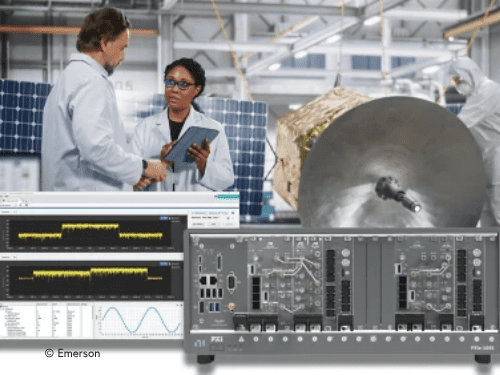
Unveiled at the 2026 Space Symposium in Colorado, NI CHESS is a software platform designed to work seamlessly with NI PXI Vector Signal Transceiver hardware. This powerful combination allows engineers to replicate dynamic RF environments, such as ground-to-orbit and airborne communication links, without leaving the lab. By leveraging RF channel emulation, teams can inject real-time RF impairments—like Doppler shift, multipath fading, path loss, and interference—into their test scenarios, ensuring that systems are validated against the challenges they’ll face in operational deployment.
The core of NI CHESS lies in its integration of model-based simulation with hardware-in-the-loop execution. Using advanced FPGA-based co-processing, the platform processes radio impairments and integrates with third-party scenario development tools. This enables engineers to test their systems under a wide range of realistic and repeatable conditions, dramatically reducing the need for expensive and logistically complex field trials.
Addressing the Growing Complexity of Aerospace Communication
The evolution of aerospace and satellite communications has placed new demands on testing and validation. Traditional methods often rely on oversimplified channel models, which may not capture the full spectrum of real-world variables. With RF channel emulation via NI CHESS, engineers gain access to a more adaptable and realistic testbed. Multi-channel and wideband support means the platform is suitable for advanced satellite and defense systems, while its software-driven architecture integrates with existing PXI infrastructure, extending the value of prior lab investments.
Chris Behnke, director for aerospace and defense RF test and validation systems at Emerson, explains, “Modern aerospace communication systems are becoming more complex, while field testing is increasingly expensive and constrained. NI CHESS gives engineers a practical way to validate mission-critical RF performance early and often using true-to-life conditions in the lab so teams can move faster, reduce risk and control costs without compromising realism.”
Benefits of Lab-Based RF Validation
By bringing RF channel emulation into the lab, aerospace teams can identify potential performance issues much earlier in the development cycle. This not only lowers the cost and logistical burden of field testing but also enables iterative improvements to system behavior before deployment. The repeatability of lab-based tests ensures that issues can be systematically diagnosed and addressed, leading to more robust and reliable communication systems.
Another key advantage is scalability. As requirements evolve and new communication standards emerge, NI CHESS’s software-based architecture makes it possible to expand or modify test scenarios without extensive hardware overhauls. This future-proofs the test environment and supports ongoing innovation in aerospace technologies.
Shaping the Future of Aerospace RF Testing
The adoption of RF channel emulation platforms like NI CHESS signals a broader shift in the aerospace industry toward model-driven engineering and digital validation methods. As satellite communications, defense systems, and commercial aerospace projects continue to push boundaries, having advanced lab-based validation tools becomes a competitive differentiator. Engineers can respond faster to new requirements, reduce time-to-market, and maintain the high reliability demanded by mission-critical systems.
With NI CHESS, Emerson positions itself at the forefront of this evolution, offering a comprehensive solution that bridges the gap between simulation and real-world conditions. For teams seeking to enhance RF testing efficiency and accuracy, embracing RF channel emulation could be the key to staying ahead in a rapidly changing landscape.
This article is inspired by content from Original Source. It has been rephrased for originality. Images are credited to the original source.