

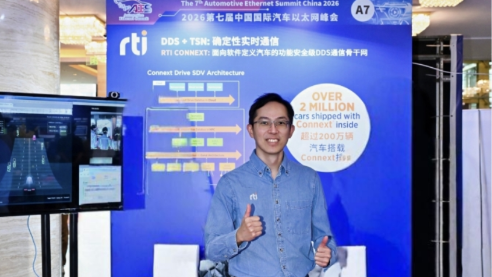
Introduction: DDS and the Future of Software-Defined Vehicles
As the automotive industry embraces smarter, more connected vehicles, the demand for robust, real-time data communication has never been greater. Data Distribution Service (DDS) is emerging as a cornerstone technology in powering software-defined vehicles, offering microsecond latency and zero-loss reliability. With traditional communication methods like CAN/LIN buses and SOME/IP struggling to keep pace with the massive influx of sensor data, DDS is rapidly gaining traction among global automakers seeking a scalable, reliable, and flexible middleware solution.
What is DDS and Why Is It Transformative?
DDS, originally developed for mission-critical sectors such as defense and aerospace, utilizes a data-centric publish-subscribe model. This means that each node in the vehicle ecosystem—be it a domain controller, sensor, or computing platform—simply declares the data it can publish and what it needs to subscribe to. DDS handles the intricate routing, scheduling, and management of this data, ensuring seamless delivery with microsecond-level latency and robust reliability. Its rich Quality of Service (QoS) policies allow automakers to fine-tune communication parameters, ensuring critical commands are never lost and supporting dynamic scaling as new nodes are introduced.
In the context of software-defined vehicles, DDS brings a key advantage: decoupling hardware and software. As vehicles transition to zone architectures and central computing, the traditional static signal binding models have become obsolete. DDS enables loose coupling and dynamic data discovery, aligning perfectly with the rapid evolution of automotive software architectures. This flexibility allows for easier integration, reduced development costs, and faster time-to-market—crucial factors for automakers navigating the complex landscape of software-defined vehicles.
DDS and TSN: A Powerful Synergy for Real-Time Communication
To achieve true real-time performance, DDS is often used in conjunction with Time-Sensitive Networking (TSN). While DDS excels at flexible data distribution and cross-platform interoperability, it relies on the underlying network for deterministic timing. TSN, on the other hand, provides deterministic, low-latency transmission over Ethernet but lacks application-level data awareness. By combining DDS with TSN, automakers can guarantee both the flexible distribution of routine data and the microsecond-level, zero-jitter transmission required for critical vehicle functions. This synergy eliminates uncertainty and paves the way for reliable, mass production of software-defined vehicles.
Current Applications and Industry Adoption
The adoption of DDS in the automotive sector is expanding rapidly. It has moved beyond intelligent driving domain controllers and is now becoming the backbone communication platform for entire vehicles. Leading automakers, such as XPENG, are leveraging DDS not just for data transmission but as a foundation for future-focused applications—including AI-powered inference, vehicle-to-infrastructure collaboration, and seamless cloud integration.
Technical standards are also catching up. China, for instance, released its first automotive DDS testing standard, T/CSAE 371-2024, developed by a consortium of industry leaders. Globally, DDS is being adopted in mass production projects, often accompanied by rigorous functional safety certifications like ISO 26262 ASIL D. According to industry insiders, by early 2026, millions of vehicles worldwide will be equipped with DDS-powered communication platforms, highlighting the technology’s accelerating adoption.
Challenges in DDS Implementation
Despite its promise, implementing DDS in software-defined vehicles is not without challenges. Organizational inertia can impede progress, as successful DDS integration requires alignment across multiple departments—ranging from intelligent driving to procurement. Additionally, migrating from CAN signal-based systems to DDS data structures demands consensus on data models and semantics, often leading to extended project timelines.
Security and performance under extreme conditions also present hurdles. Ensuring robust information security and maintaining response capabilities during high-traffic scenarios require extensive technical verification and a responsive supplier team. However, mature DDS providers, such as RTI, have invested heavily in developing comprehensive support systems and open interfaces, enabling automakers to build tailor-made platforms and accelerate innovation.
The Road Ahead: DDS as a Standard for Software-Defined Vehicles
As vehicles increasingly resemble distributed real-time databases—where nodes continuously produce and consume semantic data—DDS stands out as an optimal long-term solution over older, service-centric communication protocols. While DDS is unlikely to monopolize the field, its data-centric approach is uniquely suited to address the complexity and scale of modern automotive systems. The ongoing migration to DDS is more than a simple technology upgrade; it represents a fundamental reengineering of automotive communication. Automakers that accumulate experience across diverse deployment scenarios will gain a significant competitive edge in the era of software-defined vehicles.
This article is inspired by content from Original Source. It has been rephrased for originality. Images are credited to the original source.