

Introduction: The Need for Adaptive Space Systems
The landscape of planetary exploration is rapidly evolving, driven by the demand for resilient and intelligent solutions capable of navigating the unknown. Software-defined space systems represent the next frontier, enabling missions to adapt dynamically in unpredictable environments. As humanity aims to explore worlds beyond Mars, the traditional approach of incremental, multi-mission strategies is proving unsustainable, especially for the distant outer solar system. This article explores the concept of Planetary Exploration 3.0, emphasizing the critical role of software-defined space systems in shaping the future of space science.
The Challenges of Traditional Planetary Exploration
Historically, space agencies such as NASA have relied on a model of gradual mission sophistication, known as Planetary Exploration 2.0. This approach has led to remarkable successes on Mars, achieved through over two decades and more than 20 missions. Each mission built upon the last, refining spacecraft design and mission parameters based on accumulated environmental data. However, this incrementalism faces significant barriers in the outer solar system, where travel times can exceed a decade and the opportunity for iterative missions is impractical.
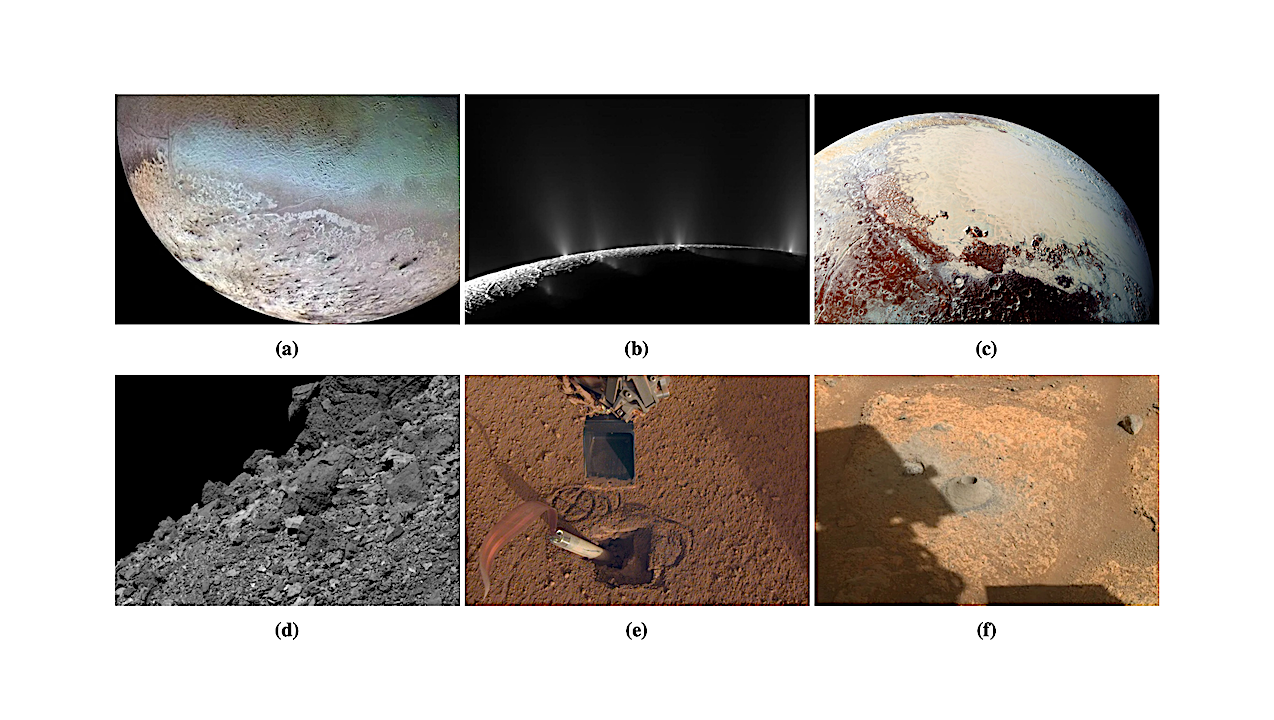
Unpredictable planetary environments further complicate exploration. Missions have encountered unexpected phenomena, such as Triton’s nitrogen geysers, Enceladus’s water plumes, and Pluto’s active geology. Near-Earth targets like asteroid Bennu and Mars itself have presented unforeseen surface conditions, resulting in navigation challenges and failed sample collection attempts. These surprises underscore the necessity for space systems that can adapt in real time rather than relying solely on pre-programmed behaviors.
Introducing Planetary Exploration 3.0
Recognizing these limitations, the scientific community proposes a transformative shift to Planetary Exploration 3.0. This paradigm envisions exploring uncharted worlds through a single or a small number of missions equipped with radically adaptive systems. Rather than launching a sequence of missions to gradually build knowledge, PE 3.0 enables a spacecraft to both conduct initial investigations and respond to new discoveries using its own evolving capabilities.
At the heart of this approach are software-defined space systems—spacecraft whose functions, from scientific operations to navigation and control, are governed by software that can be updated and reconfigured on the fly. These systems are designed for multi-functionality and modularity, allowing them to shift roles or upgrade subsystems in response to unexpected challenges or scientific opportunities encountered in situ.
Key Enablers: Onboard Intelligence and Adaptive Hardware
The transition to software-defined space systems is underpinned by several technological advancements. First, reconfigurable hardware and modular architectures allow for rapid adaptation to changing mission requirements. Second, onboard intelligence powered by artificial intelligence enables spacecraft to autonomously conduct scientific experiments, navigate hazardous terrain, and make decisions with minimal intervention from Earth.
Workshops like the Keck Institute for Space Studies have outlined a comprehensive roadmap for implementing PE 3.0. This includes new methods for system engineering, mission design, and verification processes tailored for adaptive, software-driven architectures. Importantly, these missions would possess the autonomy to shift their scientific focus in response to real-time data, maximizing the scientific return from each opportunity.
Mission Concepts and Future Prospects
Several mission concepts exemplify the potential of software-defined space systems. Proposed ideas include smart flybys of Neptune and Triton, explorations of ocean worlds in the outer solar system, and reconnaissance of distant Oort cloud objects. In each case, the ability to adapt mission parameters and instrument functions via software updates will be essential for success in environments where little is known in advance.
These innovations promise to unlock answers to fundamental planetary science questions—such as the habitability of subsurface oceans on icy moons or the geologic history preserved in Kuiper Belt objects. As the focus shifts beyond Mars, software-defined space systems will be indispensable for overcoming the immense logistical and scientific challenges of deep space exploration.
Conclusion: Embracing Software-Defined Space Systems
The future of planetary science depends on the widespread adoption of software-defined space systems. By enabling spacecraft to adapt, learn, and evolve during their missions, this new paradigm offers a practical and resilient path toward exploring the many mysteries of our solar system and beyond. As mission planners and researchers embrace Planetary Exploration 3.0, software-defined space systems will stand at the core of humanity’s next great era of discovery.
This article is inspired by content from Original Source. It has been rephrased for originality. Images are credited to the original source.