
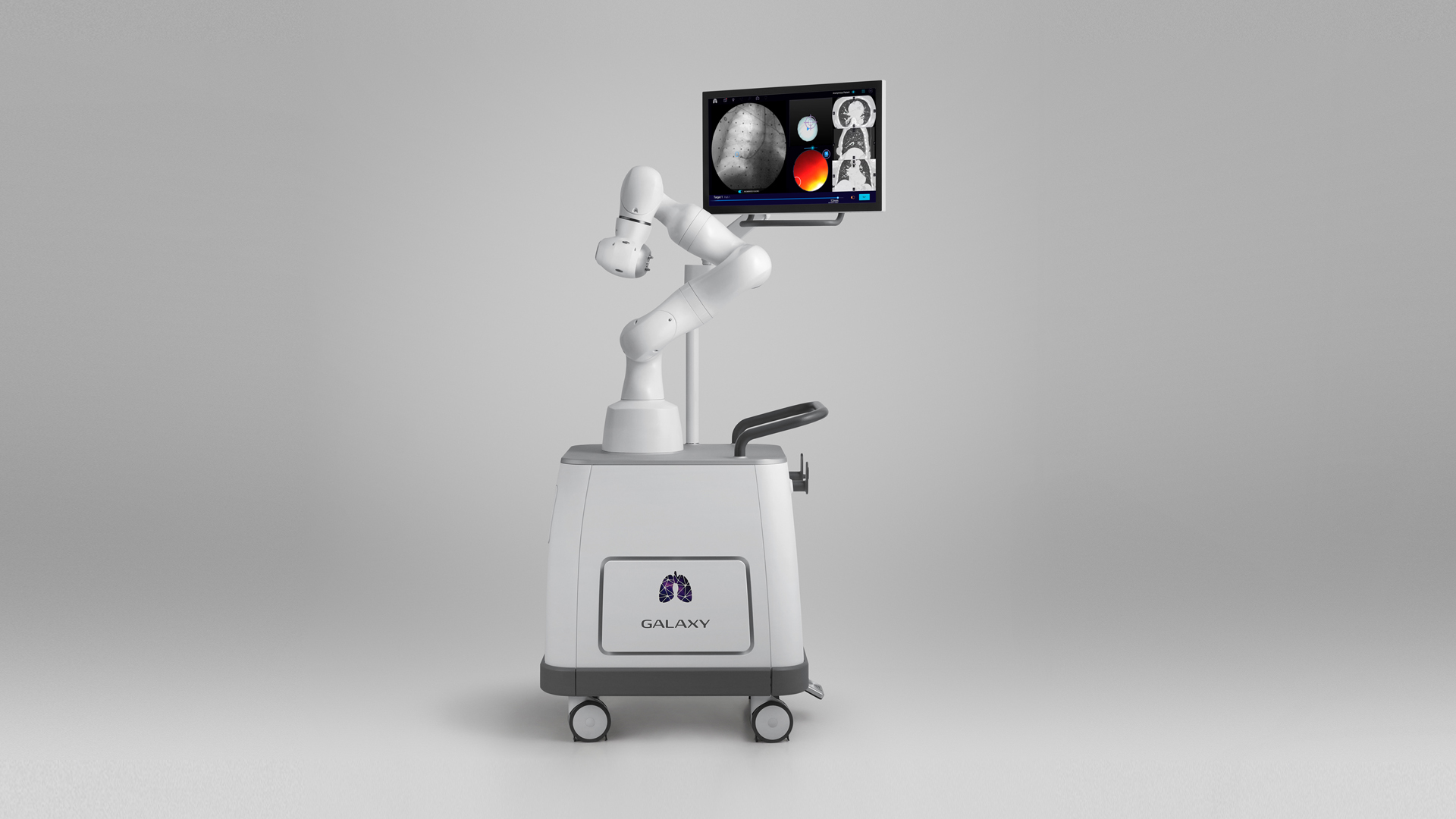
Introducing Galaxy II: Advancing Robotic Bronchoscopy Software
Noah Medical has officially launched the Galaxy II software, representing a significant advancement in the field of robotic-assisted bronchoscopy. The new platform aims to address some of the most persistent challenges in diagnosing lung cancer, a disease that remains the leading cause of cancer-related deaths worldwide. With early detection being critical for survival, technologies like the Galaxy II software are designed to enhance the accuracy of biopsies for small and hard-to-reach lung lesions.
Dual-Mode Imaging Enhances Diagnostic Precision
At the heart of the Galaxy II software is its innovative Dual-Mode Imaging feature, which empowers physicians to switch seamlessly between High-Definition Digital Tomosynthesis (HD-DT) and Cone-Beam CT (CBCT) during procedures. This flexibility allows clinicians to tailor their imaging approach based on specific case needs. HD-DT covers the majority of cases with significantly reduced radiation, while CBCT remains available for more complex scenarios that demand advanced imaging capabilities.
In addition, the system introduces Lesion Focus, a feature that minimizes imaging artifacts, ensuring a clearer, more precise view of target lesions. According to Noah Medical, these enhancements place full imaging strategy control in the hands of physicians, helping them adapt to each patient’s anatomy, reduce radiation exposure, and maximize procedural efficiency.
Addressing Key Challenges in Robotic-Assisted Bronchoscopy
Accurately reaching and sampling small pulmonary lesions during robotic-assisted bronchoscopy is often complicated by two major challenges: CT-to-Body Divergence and Tool-Tissue Divergence. The former occurs when a patient’s anatomy shifts between preoperative imaging and the actual procedure, while the latter refers to the biopsy tool deviating from its intended trajectory even when the catheter is properly positioned.
The Galaxy II software effectively addresses both issues by integrating navigation, imaging, and real-time confirmation of both lesion and tool location into a unified platform. This integration ensures high diagnostic yield and greater confidence for physicians, as highlighted by Dr. Francisco Almeida, Interventional Pulmonologist at City of Hope Cancer Center Atlanta. He noted that the platform’s ability to correct for tool-tissue divergence in real time is a key factor in its diagnostic success.
Clinical Validation and Efficiency Gains
Clinical studies have reinforced the advantages of the Galaxy II software. The multicenter MATCH II study reported a 96.7% diagnostic yield using stringent ATS criteria, while an evaluation at the Cleveland Clinic found a 90% diagnostic yield in 100 consecutive patients in routine practice. These results underscore the software’s ability to enhance accuracy and efficiency in robotic-assisted bronchoscopy procedures.
Physicians now have the option to select the most appropriate imaging modality for each case, streamlining procedures and further reducing radiation exposure for both patients and clinicians. By consolidating navigation, imaging, and confirmation, Galaxy II improves workflow and may help shorten procedure times.
Overcoming Regulatory Hurdles
The launch of Galaxy II comes as a positive milestone for Noah Medical, following challenges related to a recent FDA warning letter. In April 2025, the FDA issued a warning after inspecting the company’s San Jose, California facility, citing manufacturing controls and CAPA (Corrective and Preventive Action) documentation deficiencies. Specific issues included biopsy tools not passing through bronchoscope channels, leaking pouches, and rare but serious clinical incidents, such as excessive bleeding during procedures.
The FDA also pointed out delays in reporting adverse events, including one case involving patient death. While Noah Medical has worked to address these concerns, public records do not yet clarify the final outcome. The launch of the Galaxy II software, however, signals the company’s commitment to innovation and ongoing improvement in patient safety and clinical outcomes.
The Future of Robotic-Assisted Bronchoscopy
By integrating advanced imaging, navigation, and real-time confirmation capabilities, the Galaxy II software sets a new standard in robotic-assisted bronchoscopy. As early lung cancer diagnosis continues to be a global priority, innovations like Galaxy II will play a crucial role in empowering clinicians to deliver better patient care.
With its robust clinical validation, user-focused design, and commitment to reducing radiation exposure, Galaxy II positions Noah Medical as a leader in the next generation of robotic-assisted diagnostic technology. Physicians looking to improve diagnostic yield and patient outcomes may find Galaxy II to be a transformative addition to their practice.
This article is inspired by content from Original Source. It has been rephrased for originality. Images are credited to the original source.