

Edge AI: Bringing Usability to Robotics
Edge AI is revolutionizing the robotics landscape, much like Windows transformed the personal computer in the 1980s. Before Windows, only highly skilled engineers and computer scientists could harness the true potential of computers. The arrival of an intuitive user interface, plug-and-play hardware recognition, and built-in applications enabled anyone to use a PC effectively. Today, edge AI is poised to deliver that same usability leap to robots and automated systems.
The Evolution of Robotics and Edge AI
In the early days of personal computing, microprocessors offered unprecedented speed and capability. However, only a niche group of experts could unlock their potential, since using a PC required mastering command-line interfaces, complex hardware protocols, and custom software development. For most people, these machines appeared as mysterious, expensive boxes with little practical value.
That changed with the advent of Windows, which provided a graphical interface, pre-installed applications, and seamless hardware integration. Suddenly, the PC became accessible to the masses, democratizing computing and unlocking innovation across industries. Now, a similar transformation is underway in robotics, driven by advancements in edge AI processors from industry leaders like NVIDIA, AMD, and Qualcomm.
Why Edge AI Matters in Robotics
Modern edge AI processors can analyze sensor data and make split-second decisions on the spot, without relying on constant cloud connectivity. They’re fast, power-efficient, and cost-effective, making real-time AI workloads possible in the field. However, despite this hardware revolution, only a limited pool of experts can fully utilize these chips. These processors often run on Linux with generic applications and interfaces ill-suited for robotics. Robots require integration with cameras, lasers, GPS, and motor controllers—not just mice, keyboards, or document editors.
The Challenge: Usability and Accessibility
Most robots lack traditional input devices like keyboards and displays. They demand application-specific interfaces that allow operators to connect via web browsers from remote PCs. As a result, edge AI remains an inaccessible tool for many, echoing the early PC era when only specialists could unlock a computer’s capabilities. For the broader robotics market, edge AI processors are still seen as complex, expensive boxes—powerful but out of reach.
Solutions: Software Platforms Like NEPI
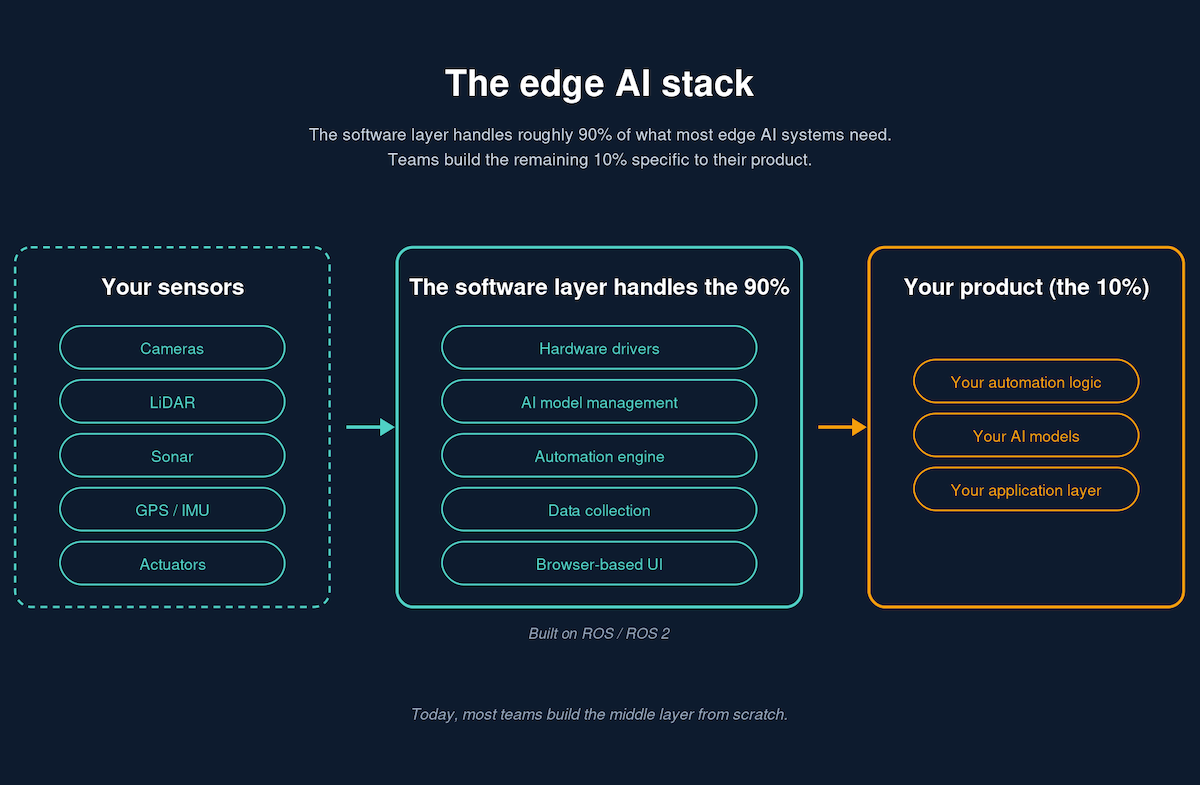
Recognizing these challenges, companies like Numurus have developed platforms such as NEPI (Numurus Edge Platform Interface). NEPI abstracts away the technical complexities by offering plug-and-play drivers for various sensors and actuators, auto-detection and orchestration of AI models, and a browser-based user interface for remote access. This platform runs as a Docker container atop the native operating system, enabling users to deploy and customize it rapidly without deep programming knowledge. NEPI’s approach is reminiscent of what Windows did for the PC—making advanced technology approachable for all.
Transforming the Robotics Ecosystem
The secret to the personal computer’s mass adoption was not just better hardware, but the software layer that made it usable. Windows enabled anyone to connect hardware devices or run essential applications with minimal effort. Similarly, the future of edge AI in robotics depends on accessible software platforms that manage hardware drivers, AI model deployment, and real-world automation tasks, all through intuitive interfaces.
Instead of reinventing the wheel for every project, teams can now leverage these platforms to focus on their unique value propositions. Built-in applications for robotics, automation, sensor data processing, and inspection save months of engineering time and reduce fragility caused by custom code. This shift will allow startups, researchers, STEM educators, and OEMs to innovate and deploy AI-powered robotic solutions faster and more cost-effectively.
The Expanding Impact of Edge AI Accessibility
As edge AI becomes more accessible, the audience for robotics expands beyond well-funded startups and defense contractors. Educational programs can introduce AI-powered automation without needing embedded software experts. Researchers can prototype smart hardware without recruiting dedicated development teams. Startups can reduce time-to-market from years to weeks, while OEMs can empower customers to configure AI features independently.
This democratization benefits not just individual organizations but the entire industry. The explosion of PC applications was fueled by a larger, more diverse user base; the same is now poised to happen with robotics as edge AI platforms lower the barrier to entry.
Already Making a Difference
Early adopters are already seeing the benefits. Maritime teams building autonomous surface vessels can focus on mission objectives rather than building custom edge AI stacks. Commercial fisheries leverage AI-enabled sonar without developing data pipelines from scratch. Underwater inspection robots can integrate AI-driven analysis quickly, focusing on inspection methods rather than embedded engineering. In all these cases, accessibility is the unlock.
Looking Ahead: The Future of Edge AI and Robotics
Even for teams with deep software expertise, the cost of building sensor integration, AI runtime, automation logic, and operator interfaces from scratch is immense. Standardized platforms free up engineering talent to focus on innovative features and reduce time-to-market. Just as Windows broadened the computing landscape, edge AI platforms will propel robotics into mainstream use.
The hardware for edge AI is ready. The software layer that truly democratizes robotics is emerging. Now, the choice for robotics engineers, educators, and innovators is whether to build everything from scratch or leverage these new tools to accelerate automation solutions. The next era of robotics will be defined not just by how smart the hardware is, but by how accessible and usable edge AI can become.
This article is inspired by content from Original Source. It has been rephrased for originality. Images are credited to the original source.