

AMD’s Early Entry in the AI Laptop Market
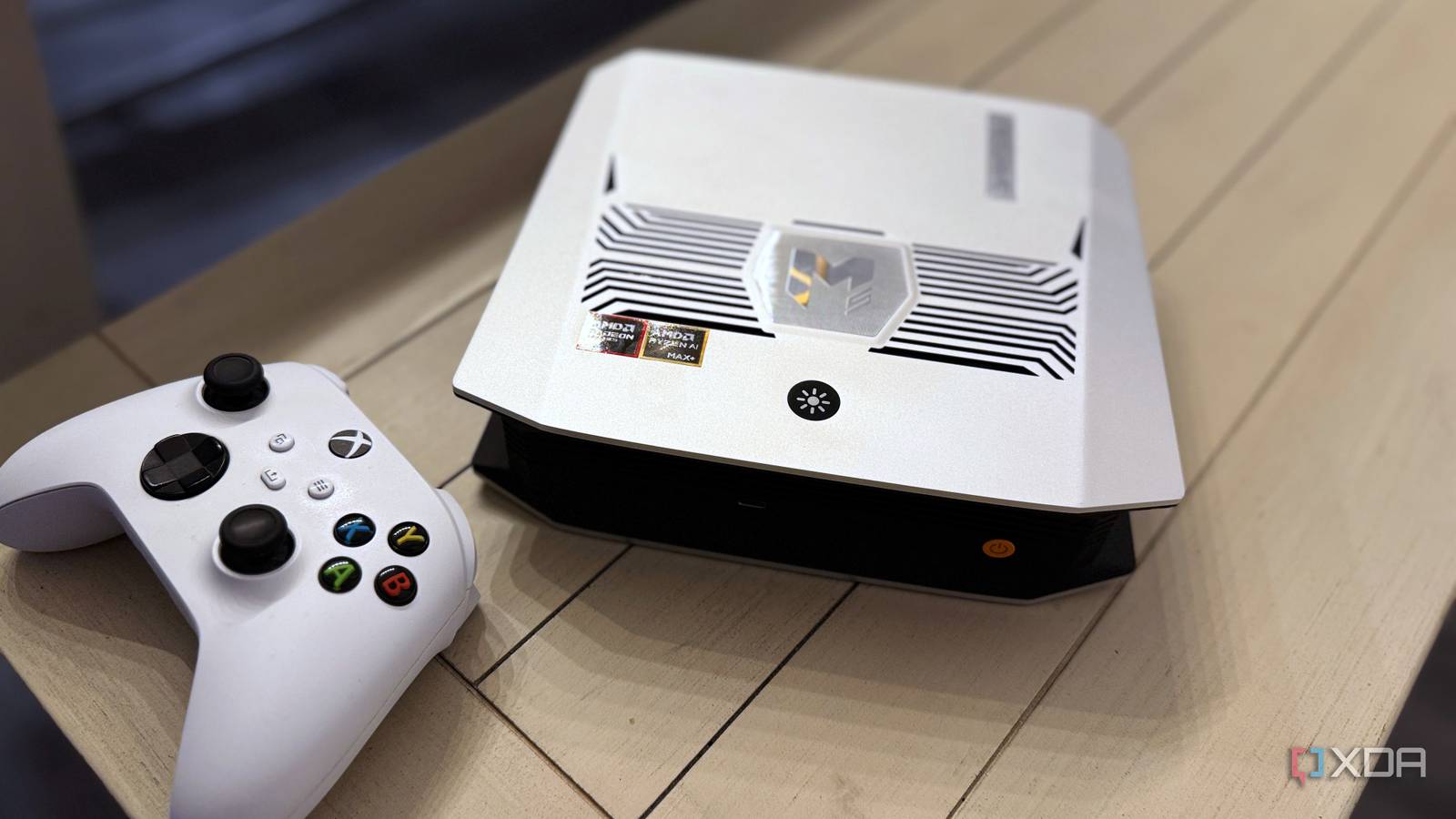
The AI laptop landscape is evolving rapidly, and few companies have shaped its direction as profoundly as AMD. While Nvidia’s RTX Spark laptops recently made headlines, AMD and HP have been providing devices capable of running advanced AI models locally for well over a year. At Computex, AMD and HP executives highlighted their head start, showcasing products like the HP Strix Halo mini PC and laptops powered by AMD’s Ryzen AI Max+ 395 chip. These devices, first launched in early 2025, set the stage for a new wave of powerful, AI-driven personal computing.
How AMD Set the Pace Before Nvidia
During a roundtable discussion, AMD’s Rahul Tikoo proudly pointed to a suite of HP-made, AMD-powered systems, emphasizing how these products have been available since CES 2025. The company now boasts 35 different products featuring the Strix Halo chip, signaling a robust and mature lineup. In contrast, Nvidia’s RTX Spark—built around the GB10 chip—was only unveiled at Computex 2026 and won’t ship until later in the year. While Nvidia’s offering is impressive, with a 20-core Arm “Grace” CPU, a Blackwell GPU, and scalable unified memory up to 128GB, AMD’s equivalent has been available for over a year, powering laptops like HP’s ZBook Ultra G1a and several mini-PCs.
The Software Stack: AMD’s ROCm vs Nvidia’s CUDA
The AI laptop conversation often turns to software, where Nvidia’s CUDA has long been the gold standard. Developers have historically favored Nvidia, thanks to CUDA’s maturity and robust feature set. AMD, however, has made major strides with ROCm, its open-source alternative. While ROCm started with fewer features, recent updates have brought it much closer to parity for local AI deployment and development. PyTorch, a leading AI framework, has integrated ROCm more deeply, making it easier for developers to use AMD hardware without rewriting code. Features like device-side assertions, memory optimizations, and expanded support for consumer hardware are making AMD a credible choice for AI enthusiasts and developers alike.
Hardware Specs: Comparing AMD and Nvidia
On paper, both AMD and Nvidia’s AI laptops offer similar specs. Each can be configured with up to 128GB of unified memory, and both target high-end performance. AMD’s Ryzen AI Max+ 395 features 16 Zen 5 cores and a 40-CU RDNA 3.5 iGPU, while Nvidia’s RTX Spark boasts a 20-core Arm CPU and a Blackwell GPU with 6,144 CUDA cores. AMD’s upcoming Gorgon Halo will push the envelope further, supporting up to 192GB of memory and 300-billion-parameter models. Pricing remains competitive, with AMD’s developer-focused Ryzen AI Halo mini-PC launching at $3,999—a direct challenge to Nvidia’s DGX Spark pricing.
Advances in AMD’s Software Ecosystem
One of the most significant shifts in the AI laptop market is the rapid improvement of AMD’s software ecosystem. ROCm is now well-supported by PyTorch, and popular local AI tools like llama.cpp, Ollama, LM Studio, and ComfyUI all run on AMD hardware. Vulkan and ROCm backends provide flexibility, with Vulkan often offering faster token generation and ROCm excelling in prompt processing and advanced features. ROCm 7.2.4 is the latest stable release, supporting a broad range of AMD GPUs and APUs, and Windows support is now a reality for consumer hardware, particularly for those using PyTorch.
Remaining Challenges for AMD
Despite these advances, AMD’s ROCm is not yet a complete replacement for CUDA. There are still gaps, especially in sandboxing for new agentic use cases and seamless support for integrated graphics. While training large models is possible on AMD Instinct clusters—as demonstrated by Zyphra’s ZAYA1-8B—it’s clear that the wider AI ecosystem remains CUDA-first. Some tools and models arrive on Nvidia hardware before making their way to AMD, and certain advanced features may require more effort to get working smoothly.
The Future of AI Laptops: A More Competitive Market
Still, the historic software gap that once justified defaulting to Nvidia for AI laptop workloads has narrowed considerably. AMD’s hardware is available now, with a validated and qualified software stack that makes it easier for developers to get started. For many, the friction and delays associated with setting up local AI on AMD hardware have become a thing of the past. As Nvidia prepares to ship its own AI laptops, the market is more competitive than ever, and developers have genuine choices for running advanced AI models locally.
Conclusion: AMD’s AI Laptops Are Ready for Prime Time
The AI laptop race is no longer a one-horse show. AMD’s head start in both hardware and software means consumers and developers can confidently choose AMD for local AI workloads. As ROCm continues to mature and the software ecosystem expands, AMD’s AI laptops are positioned as true competitors to Nvidia’s upcoming offerings, giving users more options than ever before.
This article is inspired by content from Original Source. It has been rephrased for originality. Images are credited to the original source.