

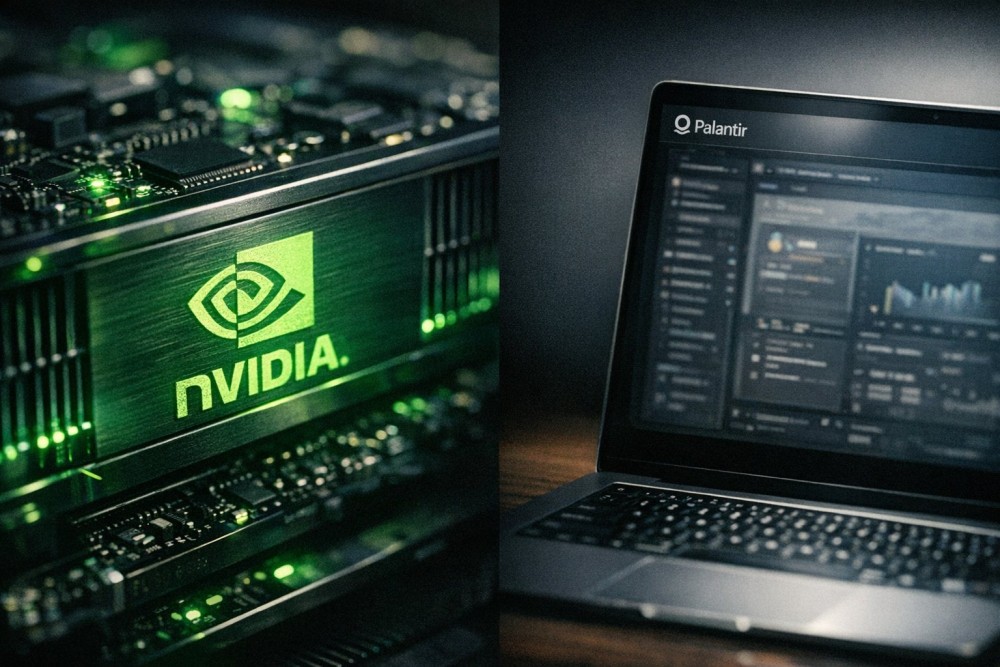
Introduction: The AI Software vs Hardware Debate Evolves
The ongoing AI software vs hardware discussion has moved beyond theory and entered a new chapter in 2026. As capital shifts from hardware dominance to software monetization, investors and technology enthusiasts are closely watching this significant rotation. Understanding the signals driving this transition is crucial for anyone interested in the future of AI investments.
Phase 1: The Era of AI Hardware Dominance
In the initial phase of the AI boom, from 2024 to 2025, hardware manufacturers such as Nvidia (NVDA), Broadcom (AVGO), and AMD led the way. Hyperscalers raced to secure computing power, resulting in soaring demand for GPUs and custom accelerators. Nvidia, in particular, achieved record revenues, with the data center segment fueling the growth. Their proprietary CUDA platform further locked in customers, making it difficult for competitors to catch up.
Broadcom and AMD also benefited, with Broadcom winning major contracts with tech giants like Google and Meta, and AMD gaining traction at Microsoft and Oracle. The investment strategy during this period was straightforward: buy the chipmakers and ride the capital expenditure wave. However, a critical question remained—where would sustainable revenue come from once all the necessary hardware was deployed?
Phase 2: The Shift to AI Software Monetization
As the installed base of GPUs reached critical mass, the focus naturally shifted toward AI software vs hardware monetization. The hardware was in place; the next challenge was extracting value from these investments through software solutions. Companies like Palantir (PLTR), ServiceNow (NOW), and Salesforce (CRM) began to stand out as leaders in this phase.
Palantir exemplified this trend by reporting an 85% year-over-year revenue increase in Q1 2026, with U.S. commercial revenue surging by 104%. ServiceNow and Salesforce followed suit, integrating AI agents into their established enterprise workflows. Their advantage lay in extensive customer networks and the ability to attach AI-driven revenue streams to existing contracts, making distribution the key competitive moat.
Identifying Rotation Signals: Revenue Per Token and Agent Adoption
Recognizing the right moment to rebalance from hardware to software is a challenge. Two main signals help validate the transition:
- Revenue per token: This metric measures how much value software applications derive from each unit of inference. As this ratio increases, it indicates that AI software is monetizing more efficiently than underlying hardware.
- Agent adoption curves: Tracking the deployment of AI agents at companies like PLTR, NOW, and CRM reveals how these tools are replacing traditional workflows, boosting pricing power and customer retention.
Investors who focus solely on hardware risk missing the upside from software innovation. Allocating a portion of your portfolio to leading AI software names can hedge this risk while maintaining exposure to the hardware layer.
Why Distribution Matters More Than Model Quality
Not every software vendor will benefit equally from the AI revolution. The most successful platforms are those deeply embedded within enterprise workflows. Model quality tends to converge rapidly among competitors, but established distribution networks provide a lasting advantage. Companies like Palantir, ServiceNow, and Salesforce have spent years integrating into Fortune 500 procurement and security stacks, allowing them to win contracts even with incremental improvements in AI.
One of the clearest financial indicators of a successful software business is net revenue retention (NRR) above 120%. High NRR signals that customers are increasing their spending and sticking with the platform, a hallmark of defensible distribution moats in the AI software vs hardware landscape.
Constructing a Balanced AI Investment Sleeve
Building a resilient AI investment portfolio means owning both hardware and software, then rebalancing as market signals evolve. A practical allocation might consist of 50% hardware (NVDA, AVGO, AMD), 35% software (PLTR, NOW, CRM), and 15% cash for tactical opportunities. Regularly reviewing hyperscaler capex trends and software revenue metrics can guide these adjustments, ensuring your portfolio adapts as the capital rotation unfolds.
Conclusion: Embracing the Gradual Capital Rotation
The AI software vs hardware rotation is not an either-or scenario. Both layers play vital roles in the ongoing AI evolution. While hardware remains a foundational holding due to unrelenting compute demand, software is poised to deliver the next wave of returns by monetizing existing infrastructure. By building a balanced AI sleeve and rebalancing based on key signals, investors can capture the full potential of this transformative period in technology.
This article is inspired by content from Original Source. It has been rephrased for originality. Images are credited to the original source.