

Introduction: Revolutionizing Industrial Engineering with Autonomous AI Engineers
Accelerated computing is reshaping the landscape of industrial engineering, driving dramatic reductions in simulation times—from weeks down to mere hours. Yet, the real breakthrough lies in the autonomous AI engineers that now automate the entire engineering workflow, from computer-aided design to simulation and analysis. A standout innovation powering this transformation is NVIDIA NemoClaw, a secure, open-source blueprint for developing advanced AI agents. At GTC Taipei during COMPUTEX, NVIDIA, alongside leading industrial software providers, showcased how these autonomous AI engineers are redefining engineering processes across multiple sectors.
NVIDIA NemoClaw: The Blueprint for Secure AI Agents
The core of this innovation is NVIDIA NemoClaw, an open blueprint designed for building specialized, long-running AI agents with robust security. NemoClaw features a flexible harness, allowing seamless integration with various orchestration frameworks like OpenClaw and Hermes. This adaptability ensures enterprises can efficiently deploy and coordinate AI agents within their existing infrastructure.
With support for NVIDIA NeMo libraries and a model router, users can customize agents for specific tasks, enhancing the capabilities of their autonomous AI engineers. Deployment options are versatile, ranging from NVIDIA DGX Spark supercomputers to enterprise data centers and cloud service providers. At the heart of NemoClaw is NVIDIA OpenShell, an open-source runtime that enforces strict policy-based security, meticulously controlling agent access to files, networks, and tools at every layer.
Industry Leaders Automate Engineering with Autonomous AI Engineers
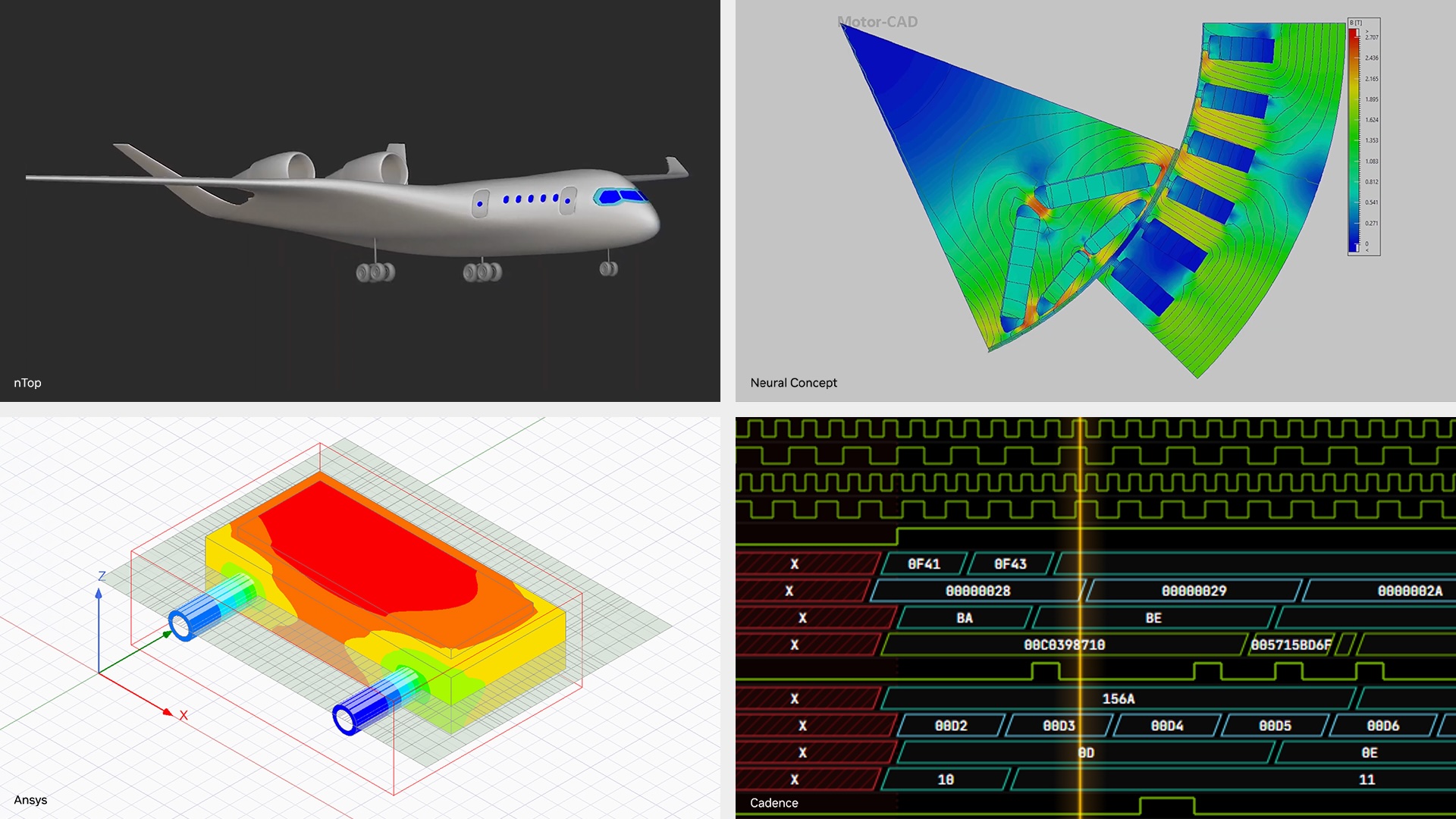
Leading engineering software companies are leveraging autonomous AI engineers for complex workflows in computer-aided engineering (CAE) and electronic design automation (EDA). For instance, Cadence is building an AI-powered register-transfer level (RTL) engineer using NemoClaw, orchestrating the Cadence Design Systems ChipStack for efficient design and verification. This approach has slashed RTL verification times from weeks to hours, as demonstrated during a GTC Taipei keynote.
Dassault Systèmes is deploying the 3DEXPERIENCE Agentic Platform, utilizing NemoClaw and OpenShell to run secure, autonomous agents that streamline design, simulation, and manufacturing operations. Siemens is incorporating NemoClaw and OpenShell into Fuse EDA AI Agent, which orchestrates complex, multi-tool workflows for semiconductor, 3D integrated circuit, and printed circuit board system design. Synopsys, in collaboration with NVIDIA, is applying AI agents to automate end-to-end engineering workflows. Ansys Icepak, part of the Synopsys portfolio, is being used within a NemoClaw-based AI engineer to optimize GPU electronics cooling designs.
Startups Extend the Reach of Agentic AI
Innovative startups are also harnessing the power of autonomous AI engineers built on NVIDIA NemoClaw. Flexcompute, for example, applies OpenShell to its Tidy3D and PhotonForge agents, enabling overnight exploration of thousands of design variants for co-packaged optics. NVIDIA itself uses Flexcompute’s technology to optimize advanced optical and photonic devices.
Luminary is constructing a long-running AI engineer with NemoClaw to automate data generation, machine learning model selection, and training loops, significantly reducing the complexity and duration of AI physics model training. Neural Concept’s AI agent links electromagnetic, structural, and noise simulation steps to streamline electric motor design. nTop, powering JetZero’s aerospace projects, uses NemoClaw to compress days of geometry iteration into just hours.
PhysicsX, in partnership with Microsoft, is developing an electronics thermal simulation agent that automates the entire CAE workflow for devices like Microsoft Surface laptops. This agent leverages PhysicsX, Microsoft Discovery, and NVIDIA NemoClaw to run simulations, generate data, train physics AI models, and continually monitor accuracy throughout the design process.
P-1 AI is creating “Archie,” an autonomous AI mechanical and electrical engineer that manages data center cooling and critical power systems and is expanding into automotive and aerospace. Archie synthesizes requirements, selects components, and produces engineering artifacts to help manufacturers scale efficiently.
SimScale is using NemoClaw to build autonomous simulation agents for a wide range of engineering applications, automating workflows that once required weeks of effort from multiple engineers. Meanwhile, Synera is developing an AI agent for injection molding, integrating Autodesk Moldflow, NVIDIA OpenShell, and Nemotron models to automate this high-volume manufacturing process.
Conclusion: The Future of Industrial Engineering
The rise of autonomous AI engineers powered by NVIDIA NemoClaw signals a new era in industrial engineering. By automating complex workflows and enabling secure, scalable agentic AI, companies across automotive, aerospace, semiconductors, and manufacturing are achieving unprecedented efficiency and innovation. As more organizations adopt these autonomous solutions, the role of AI in engineering will only continue to expand, driving faster development cycles, enhanced security, and more robust product outcomes.
This article is inspired by content from Original Source. It has been rephrased for originality. Images are credited to the original source.